Prepared for Andrew Kalogirou

Yellow Brick Road

Your client documents, handled.

An adaptive document intake system for your Rosanna branch — proven on your exact problem before you spend a dollar.

Andrew Kalogirou — Yellow Brick Road  ·  3 June 2026  ·  Valid until 17 June 2026
Book a 15-minute call →
The short version

700 documents a month, handled — without the workflow your team hates

Your team handles around 700 client documents a month across three branches. Today that means hours of manual reading, relabelling and filing for every application. You've already seen what happens when that gets automated badly: a well-funded, AWS-backed build spent close to two years and a reported ~$170,000 and never got past the first stage. It broke on a single interstate licence, and every change meant going back to the vendor.

This proposal is different in one important way: the hard part is already proven. We ran your exact problem — the six situations that stalled the last build, plus six real phone-photo IDs — and it cleared all of them.

~3 hrs/dayadmin time targeted back
6 / 6prior failure modes cleared
~$20kvs a reported ~$170k before
Where you are now

The budget was never the problem. The approach was.

You run a busy YBR franchise: 11 brokers, three branches, around 45 settlements a month and roughly 700 client documents flowing through a shared admin inbox. Every application means someone opening attachments, working out what each document is, renaming it to your convention, filing it into the right client folder, and checking it against a compliance checklist that changes regularly. It works, but it eats the time your team should be spending with clients.

You tried to fix this once already. The previous provider, brought in through AWS, invested close to two years and a reported ~$170,000. It never got past stage one. It broke when a Western Australian licence didn't match the format it expected, and adapting to anything new meant a fresh quote and a wait — sometimes months. A new compliance checklist landed the day before we first spoke, which is exactly the kind of change that approach can't keep up with.

A rigid system, in an industry where the rules never stop moving, was always going to stall.

Proven before you spend a dollar

We ran your problem first

Before asking you to spend anything, we built a realistic application pack and seeded it with the six situations that broke your last build — then ran six real phone-photo IDs through the same reading layer: three states, an overseas passport, a Medicare card.
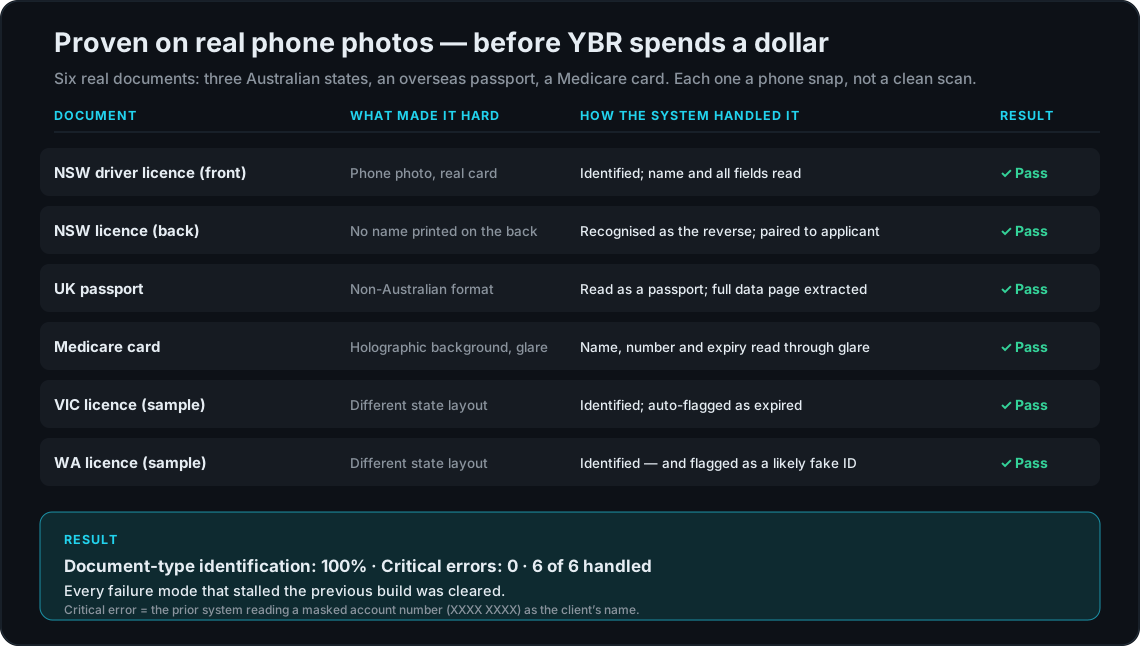
Test results on real phone photos

Six real documents, photographed on a phone the way a client would. Each one identified and read correctly.

100%document-type ID
0critical errors
6real IDs, 5 formats
1fake ID caught

The six situations that stalled the last build — all cleared

Masked account number (XXXX XXXX) — read as a masked number; real name found elsewhere.

Middle-name variant — matched to the same person, flagged to confirm.

Joint account — assigned to both applicants, routed for your policy.

Home-loan statement, no name — linked by property address.

Two documents in one PDF — read both, clean split proposed.

Unknown document — preserved and labelled, never discarded.
The solution

An intake system that adapts instead of breaking

The difference between this and what you had is one word: adaptive. The old system worked off fixed rules, so every new bank layout, unusual document or compliance change meant going back to the vendor, paying more and waiting. This reasons about what it's looking at the way a trained admin would — so a new format or a new checklist is just another day. When compliance changes, it adapts. You don't lodge a change request, and you don't wait three months.

01

It collects

An always-on layer watches the application inbox and picks documents up the moment they arrive. No change for brokers or clients.

02

It understands

Every document is read in context, not pattern-matched — a tax return from a payslip, a taxpayer from their accountant.

03

It files & checks

Renamed to your convention, filed into the right client folder, and checked against your current compliance checklist.

04

It reports

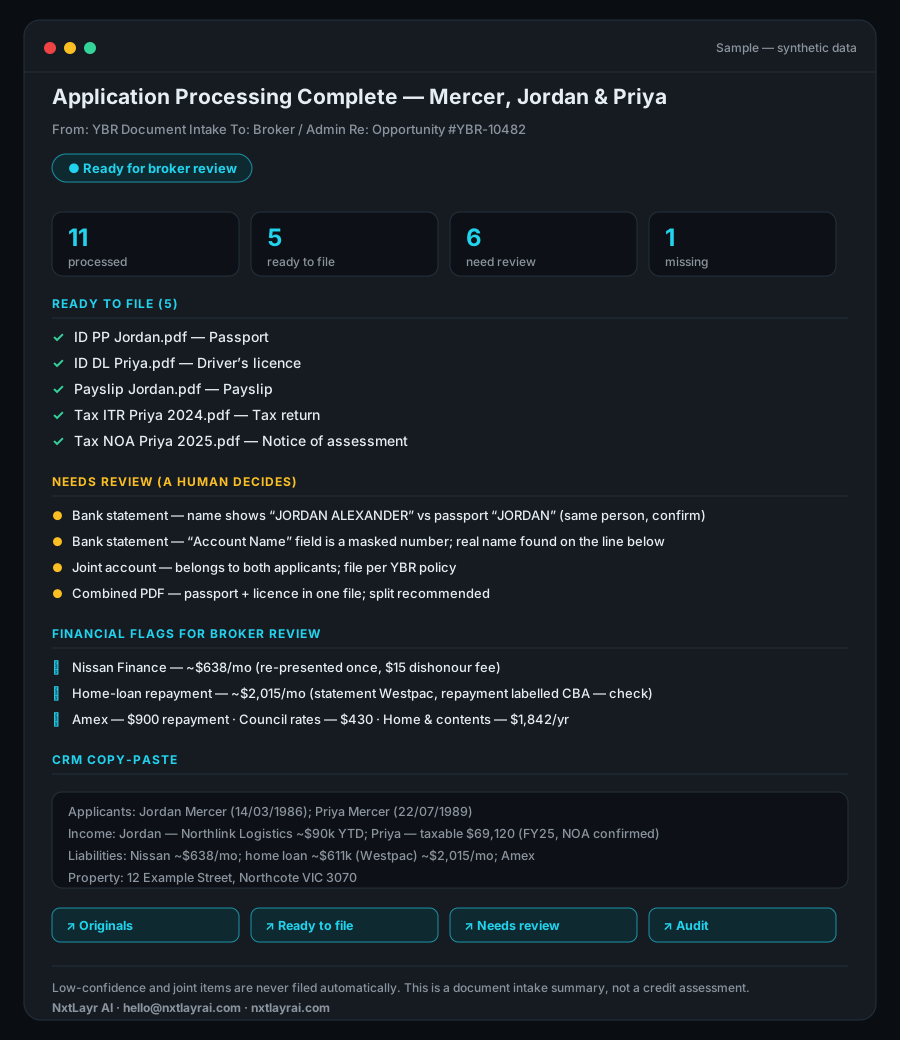
The broker gets one clean summary: filed, outstanding, financial flags, and a copy-paste block for your CRM.

Example broker summary email

What the broker receives for every application. (Sample shown on synthetic data — fully tweakable to your format.)

Security & privacy

How your clients' data is handled

You're handling identity documents and financial records, so this matters as much as the result.

A full Statement of Work will set out scope, data handling, responsibilities and terms — including that the AI is not responsible for credit, financial or compliance decisions, which remain with your qualified team — before any real documents are touched.

The value

What this is worth to the branch

Illustrative, using your own numbers from our call. Final figures depend on your volumes and how you redeploy the time.

Admin time back
Hours → minutes
per application

Your goal: free ~3 hours a day of admin time. At ~21 working days that's about 60 hours a month back to client-facing work — plus fewer errors and faster turnaround.

New capacity
+1–2 deals/mo
if time goes into clients

At the group's ~$755k average loan and the ~0.65% upfront commission, one extra settlement a month is ~$4,900 (0.65% × $755k). One or two is ~$4,900–$9,800/mo in new commission. Gross and illustrative.

Vs the last attempt
~$20k vs ~$170k
weeks, not years

The previous build reportedly ran close to ~$170,000 over nearly two years and stalled at stage one. Pilot plus full deployment here is $20,000 + GST total — live in about two weeks.

Investment

Build your engagement

Start with the pilot. Add the rest when you're ready. All prices + GST.

Phase 1 — Paid Pilot START HERE

Live on your real Rosanna documents for ~2 weeks, against your actual naming convention and current compliance checklist. One clear success bar: 90% accuracy on documents a person can read. Fully refundable if it doesn't clear that bar.
$5,000

Phase 2 — Full Deployment

The adaptive intake system live for Rosanna: always-on collection, reading and filing to Drive, compliance-checklist matching, and the broker summary for every application. Follows a successful pilot.
$15,000

Add-on — Team AI Enablement

One session for all 11 brokers plus admin: best-practice prompting, which AI to use for what, and hands-on help rolling out a Claude Team plan across the group. Add at any time.
+$5,000
Pilot + Full Deployment
$20,000 + GST
You've seen what the alternative costs. A reported ~$170,000 and nearly two years got stuck at stage one. This gets you past it — and keeps you there.
Beyond the pilot

The road this opens up

The pilot and first deployment solve document intake. That same foundation is the start of a ladder you named yourself — scoped and quoted one build at a time, so you only ever pay for what's working:

Next step

The last build took 18 months. The pilot runs in two weeks.

Next step is a short call to lock the pilot scope and the three things we'll need from you: your naming-convention list, your current compliance checklist, and your joint-account filing policy.

Book a 15-minute call → Email us

Chris Gulotta · NxtLayr AI · 0477 018 400 · hello@nxtlayrai.com

NxtLayr AI · hello@nxtlayrai.com · nxtlayrai.com